Water in one flat, holes in another.
When ADI arrived, the building manager showed the engineer a bedroom ceiling in one of the flats with water dripping through it. In another flat, a plumber had already made several holes trying to find the leak.
A damp survey came next. It found high readings underneath the bath, on the bedroom carpet and under the boiler, which showed where the water had reached but still left the question of which pipe it was coming from.
Testing one supply at a time.
The engineer pressure tested the cold-water feed first. It passed, so that pipework showed no sign of a leak.
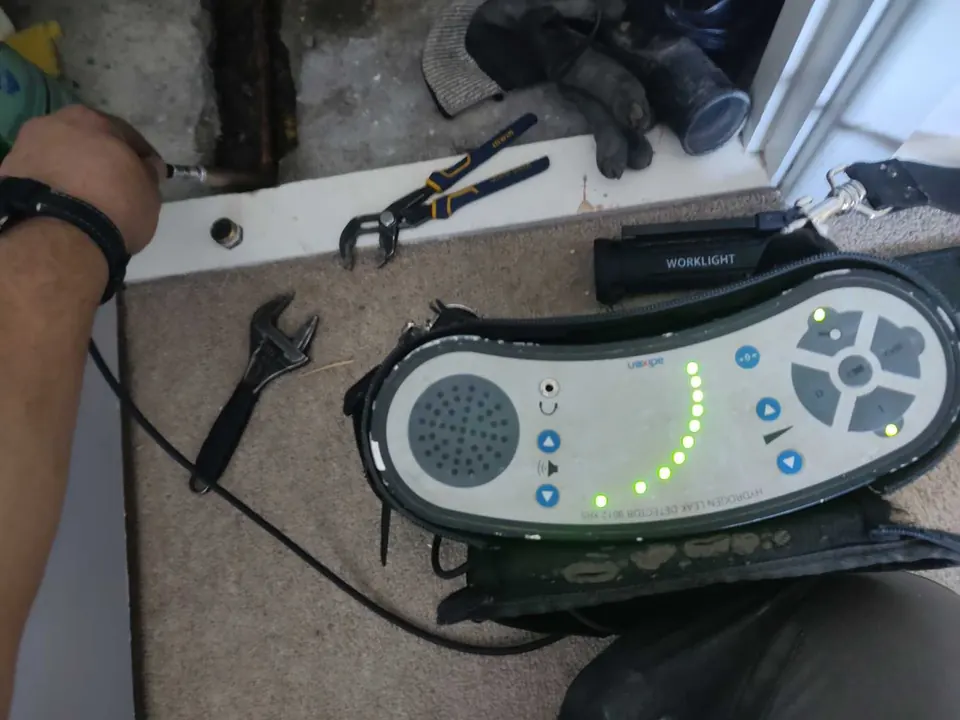
The hot-water feed failed its test. With the search narrowed to the hot-water pipework, tracer gas was used, and it was detected in the area under the boiler where the damp readings had already been high.
Lifting the carpet to reach the pipe.
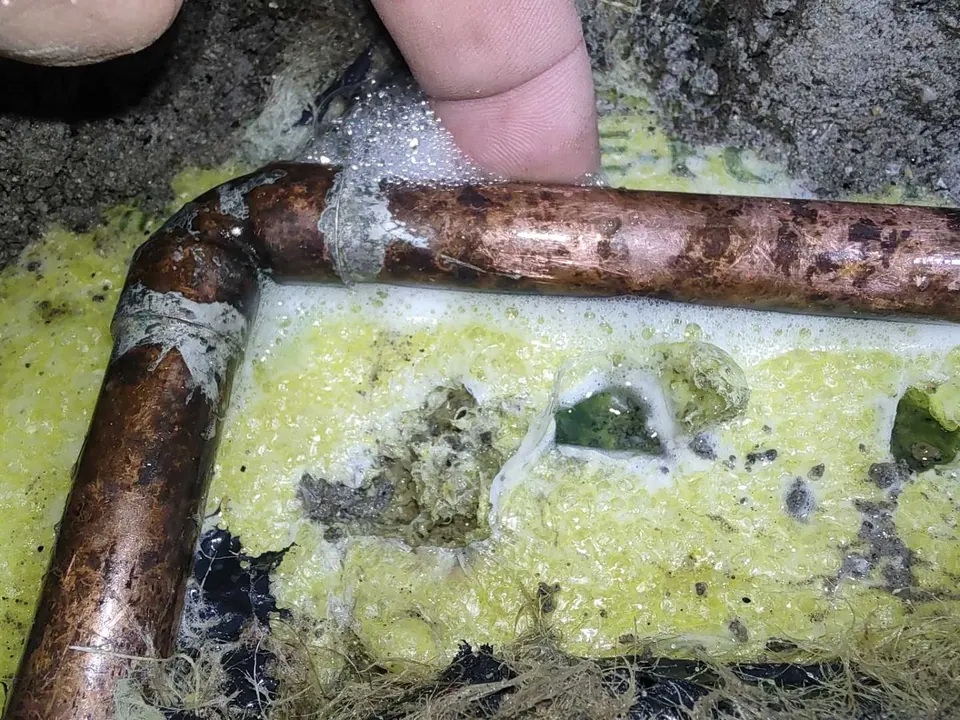
The bedroom carpet was lifted to expose the concrete floor, and ADI found a leak on a 15mm copper pipe. The leaking section was replaced with new copper pipe and fittings, with lagging.
The hot-water pipework was then retested at 4 bar for 20 minutes. It passed, and the report records no further leaks on that pipework at the time of testing.
The floor still had to dry out.
The report recommends leaving the exposed floor open until it has dried. Relaying the carpet and making good were left for later, and the record does not show that work as finished.
Testing the cold and hot feeds separately told the engineer which supply to follow before the floor was opened. Where an earlier search has already caused damage, that kind of step-by-step evidence helps everyone see why the next opening is being made.
More case studies from flatsRead about access between flats