Describe the leak when you call.
You do not need to diagnose the leak before calling. Describe the visible signs, when they started, any previous work and whether another flat is affected. Have the postcode and property details to hand.
ADI can discuss which investigation may be suitable and provide a quote. Ask what the price includes, what may cost extra and who will receive the findings. Availability, scope and charges are agreed with ADI.
Preparing access for a flat leak survey.
Confirm the booking with everyone whose home may need to be entered. Tell ADI about shared supplies, locked rooms, communal service areas, stairs and parking. Discuss lift access when the flat is above two storeys.
Make the agreed areas reasonably accessible and explain any known restrictions. Ask ADI for preparation instructions specific to your system, especially heating or underfloor heating. Do not alter systems or expose pipework just to prepare without appropriate advice.
If you are a tenant, coordinate through the person authorised to arrange the work. For multiple homes, use our access coordination guidance.
Leak detection equipment used in flats.
Not every technique is suitable for every leak. The engineer selects a combination based on the system, access and conditions on the day.
- Moisture meters
- Help compare moisture readings across an affected area. A reading is a clue that needs interpretation alongside the surrounding evidence.
- Thermal imaging
- Shows surface temperature differences. It can help identify patterns associated with concealed water or heating pipework; it does not see through a wall or prove the source by itself.
- Acoustic listening
- Uses specialist listening equipment to investigate sound associated with escaping water. Suitability depends on the pipework and the conditions.
- Tracer gas and pressure testing
- Can help investigate hidden pipe systems where appropriate. ADI determines the test arrangement and any preparation needed; these are professional survey methods.
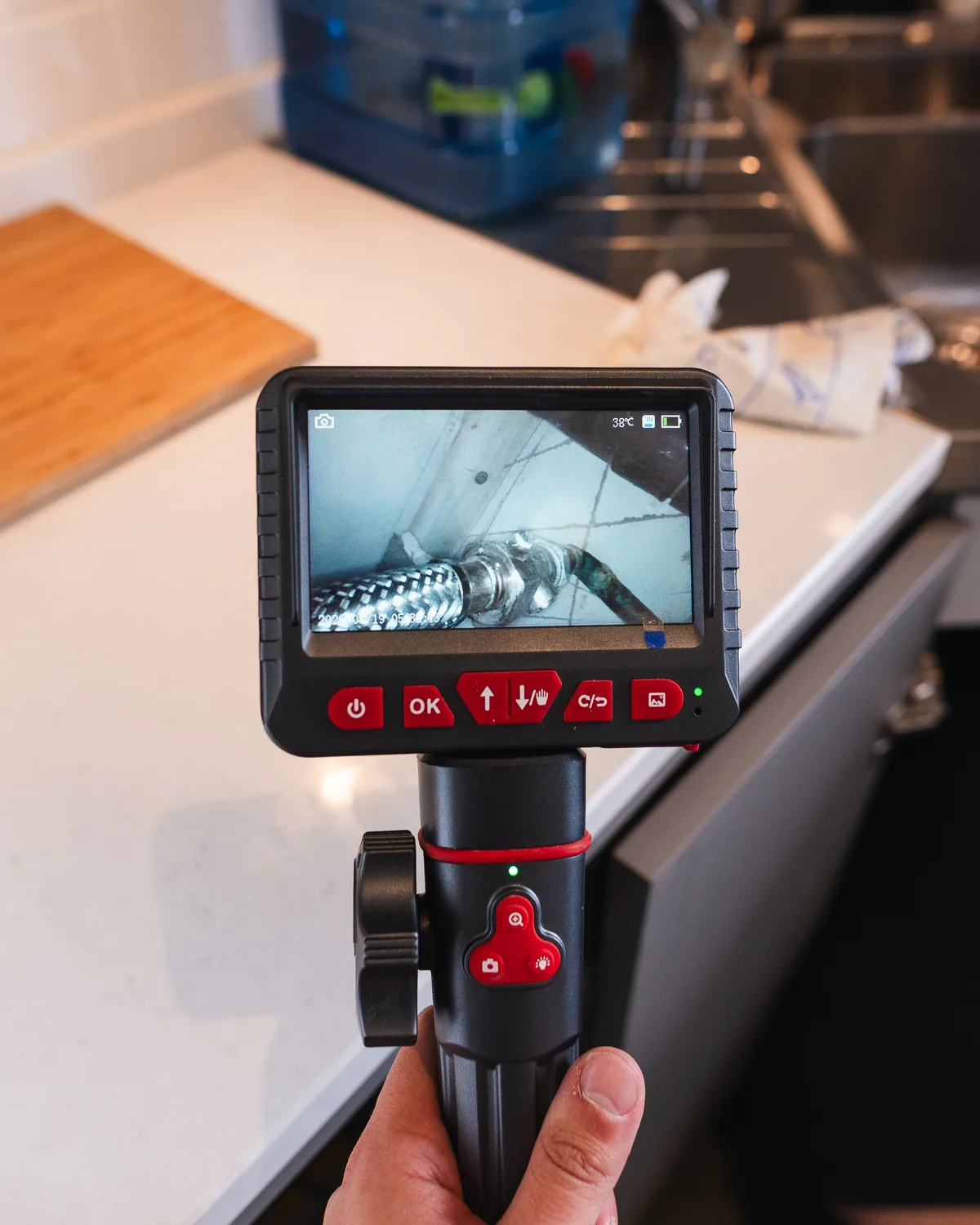
- Inspection cameras
- Allow a closer look into accessible spaces, helping inspect areas that are otherwise difficult to see. Access limitations still matter.
Survey findings, limits and next steps.
Ask for the findings and the supporting report arrangements when booking. Clarify who will receive the information and when. ADI’s terms state that reports are released after full payment.
An investigation may narrow the area that needs closer inspection. Exposing a suspected leak can still be necessary to confirm its exact position. Detection does not guarantee zero disruption.
Opening up, repair and making good are separate matters to agree. Some repairs need a different trade or another appointment. A report can help explain the investigation to an owner, managing agent or insurer; it does not guarantee an insurance payout.
Ask ADI for the full booking terms and conditions of service and read them before instructing work. You can contact the ADI team to request a copy.
Flat leak detection survey questions
Can you give a fixed price on this website?
No. ADI needs to understand the property and likely investigation before quoting. Call with the postcode, symptoms and access details.
Will every method be used?
No. Equipment is selected for the job. A technique may be unnecessary, unsuitable or limited by the available access.
What if the leak is intermittent?
Explain when it occurs and any pattern you have recorded. The conditions during testing may affect what can be established; discuss these limitations before booking.