Two flats, connected symptoms.
ADI attended a block of apartments where the lower flat had visible damage to its ceiling and wall. In the apartment directly above, the boiler pressure was very low. Those observations gave the engineer a starting point, but did not by themselves identify the leaking pipe.
Moisture readings in the affected area showed elevated levels consistent with the water damage extending down towards the floor. The investigation considered the heating system in the flat above alongside the signs in the lower home.
Following the evidence.
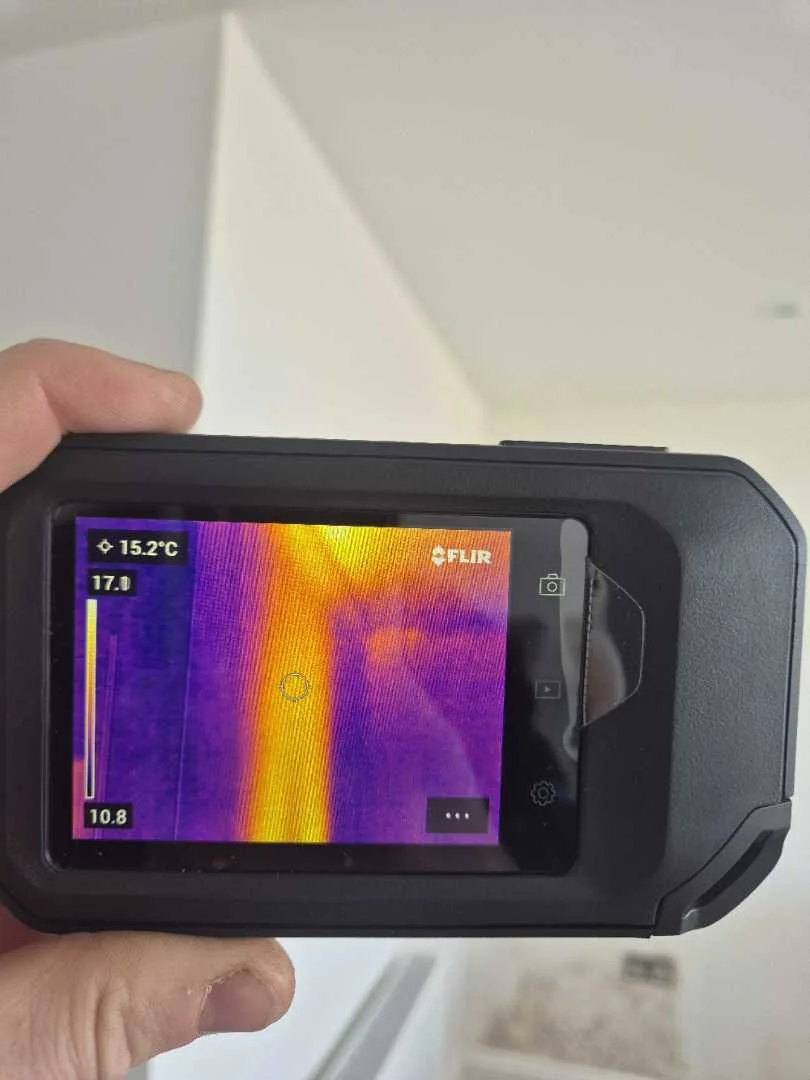
Thermal imaging was used to trace the heating pipework. It detected no anomaly in this investigation.
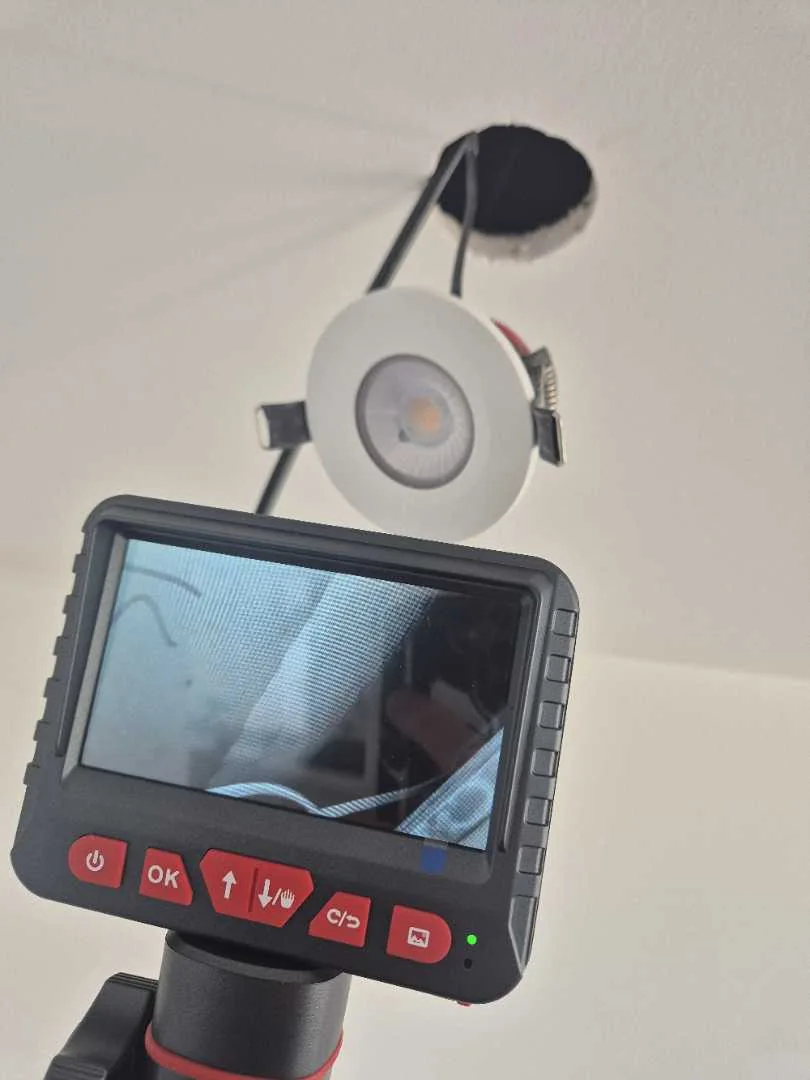
Further testing with tracer gas showed a consistent pressure drop, with gas detected near a television unit. An endoscope inspection then revealed old, disused pipework behind the wall. The combined findings indicated a low-level leak from that pipework behind the units.
Access, capping and a retest.
After discussing the findings with the customer, ADI accessed the redundant pipes through the ceiling and capped the leaking section. This required opening the plasterboard ceiling and caused access damage.
The system was retested, then refilled, and the boiler was recommissioned. The report records no further issue during the retest and that the boiler held pressure following the repair. That is the recorded outcome of this job, rather than a guarantee about another property.
The leak repair was not the end of the work.
Repairing the plasterboard ceiling was still recommended because of the access opening. The affected area also needed drying and reinstatement. The case record does not establish that those follow-on works had been completed.
This example shows why the visible damage, the concealed source and the work needed to make good can be different parts of the same problem. If more than one home is affected, agree access and the scope of work before the investigation.
More case studies from flatsRead about access between flats
What to expect from a survey